Dear Joely: Should I Just Outdrink My Mother?
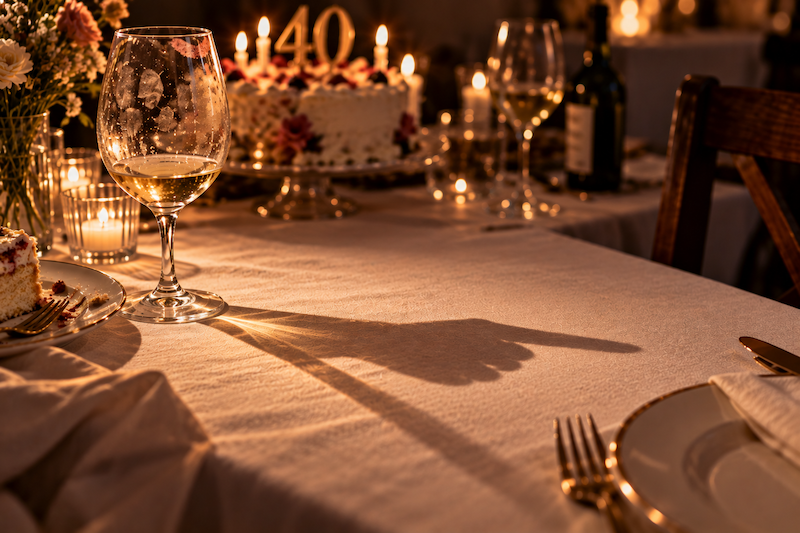
She wants to celebrate her sister’s 40th. She just doesn’t want to spend the evening defending her job, her single life and her existence to Mum and Auntie Chardonnay.
When the family party starts with cake and ends with you defending your life choices.
Dear Joely,
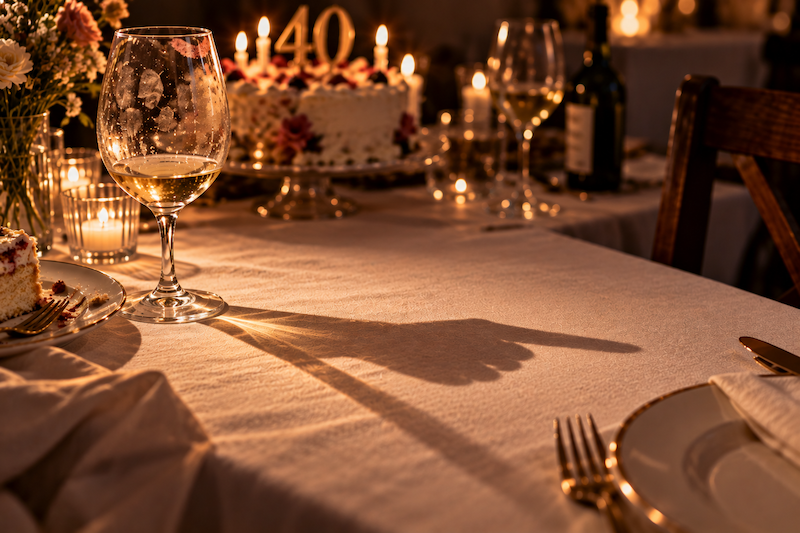
My sister turns 40 next month and there's a big family gathering planned — all the immediate family (there are four of us kids, plus Mum and Dad), along with aunts, uncles, cousins, partners and kids.
Over the years I've learned to dread these get-togethers. It's not seeing everyone that's the problem — it's what happens once the drinks start flowing. My mother gets very personal, often downright nasty, and I can see her mood start to turn after a few wines. My aunt usually joins in on whatever her cause is, and then I've got both of them gunning for me. It feels like a sport for them.
They tend to target my job (I work in healthcare, specialising in abortion and contraception services) and the fact that I'm single by choice — endless fodder for judgment and meanness, apparently.
My Dad will sometimes touch my arm as a small gesture of comfort, but he never speaks up — he doesn't want to rock the boat. My brothers ignore it entirely. My sister has tried standing up for me a few times, but it never goes very far — she's always been the golden child, so even her pushback doesn't carry much weight with Mum.
I'm close with my sister and want to be there for her party. But I've been through this so many times, and I always end up leaving early, hurt and upset. My mother never mentions her behaviour afterwards, which somehow makes it worse — like it never happened.
I know a common suggestion would be to talk to her directly, but I don't think that would land. She tends to play the victim and would likely get hysterical rather than hear me.
I'm already anxious about this, three weeks out. What can I do — either to protect myself on the day, or to stop dreading these events altogether?
Yours,
Considering trying to outdrink her

Dear Considering Trying to Outdrink Her,
Don't outdrink her. You need your reflexes, and she's had years to train for this event.
I can understand why you're already anxious. You're not catastrophising about something that might happen. You've been to this particular show before, you know the cast, and apparently after a few wines your mother and aunt perform a little two-hander called Everything That's Wrong With Your Life.
The important thing is that you're not going for them. You're going because you love your sister and want to be at her 40th birthday. So I don't think you should surrender the party in advance just because two other guests have repeatedly behaved badly at previous ones.
I do think you should go differently this time.
First, have your own transport and your own exit plan. Tell your sister beforehand that you're looking forward to being there, but if Mum starts on you, you won't be sticking around for it. That way, if you do leave, your sister knows exactly why and you don't spend half the drive home worrying that you've ruined her birthday.
More importantly, decide now that you are not going to defend yourself.
Your job does not require a submission to the Family Ethics Committee. Your relationship status isn't a vacancy your mother needs to fill. You don't have to persuade either of these women that your life is acceptable before you're allowed to enjoy it.
The moment it starts:
“Mum, we're not doing this tonight.”
If she keeps going:
“I came to celebrate my sister. I'm not discussing my life with you when you've been drinking.”
Then leave the conversation.
And I mean literally. Pick up your glass and move. Go and talk to a cousin. Find the children. Become passionately interested in whatever's happening near the sausage rolls. You don't have to leave the whole party merely because your mother has opened court proceedings.
That's the bit I'd really like you to change this time. At previous gatherings, it sounds as though Mum and Auntie Chardonnay have been able to choose both the subject and the duration of the attack. They start, you defend yourself, they escalate, everyone else becomes fascinated by the carpet, and eventually you leave hurt.
No.
They can start. They don't get to decide that you stay.
If your mother follows you and continues, then yes, go home. No showdown. No devastating final speech from the doorway. No attempt to make a drunk woman finally understand something she has been declining to understand while sober for years.
As for your family, everyone appears to have found a role that keeps them comfortably out of the firing line. Your aunt supplies ammunition. Your brothers have apparently entered witness protection. Your sister occasionally attempts peacekeeping. And Dad touches your arm.
I'm sure the arm-touch is loving. But unless Dad's arm contains a tranquilliser dart for your mother, we're going to have to classify it as emotional support rather than active defence.
The good news is that you don't actually need any of them to rescue you.
That's also how I think you begin to stop dreading these gatherings. At the moment, the anxiety starts three weeks early because you're imagining the same ending you've had before. Mum gets drunk. Mum gets nasty. Aunt joins in. You endure it until you can't, then go home devastated.
Give the story a different ending.
Go to your sister's party. Have a lovely time. Don't explain your career. Don't defend being single. Don't enter the witness box. And if your mother decides that her daughter's 40th is the perfect occasion to get pissed and conduct another performance review of her other daughter, let her discover what happens when the employee simply walks out of the meeting.
She'll probably pretend nothing happened the next day.
She can.
You'll know something did.
You stopped standing there for it.
Yours, declining to appear for the defence,
Joely
Dear Joely: I’m Not a Drunk, But
A sceptical man writes to Joely wondering whether his drinking is becoming a problem, while doing his best not to sound like the sort of man who writes to advice columns. Joely is not fooled.
Dear Joely,
I’m not entirely sure why I’m writing to you, except that a friend of mine’s wife likes your column, which I imagine is about as glowing a recommendation as one can expect for an advice page.
In any case, I have a question, or possibly a problem, depending on how dramatic we’re being.
I think my drinking may be getting a bit out of hand. I say “may” because I’m still employed, still paying my bills, and not waking up in a hedge in Stevenage with one shoe missing. I’m not pouring vodka on my cornflakes, and I haven’t yet become the sort of man people speak about more quietly over Christmas lunch. So I do have some perspective.
That said, I’m drinking more often than I mean to, and more than I intend to once I’ve started. I’ve also begun waking up feeling woolly, thick-headed, and vaguely disgusted with myself more often than I’d like. A woman I was seeing recently told me she never knew which version of me she was going to get after a few drinks — the funny one, the moody one, or the one who suddenly wants to start an argument over absolutely nothing. I didn’t enjoy hearing that. Mainly because I think she may have been right.
So my question is this: at what point does “I should probably get a grip” become “this is an actual problem”? And before you say “go to AA” or “talk to your doctor,” I am aware those options exist. I’m asking whether you think this sounds like a genuine issue, or just a man in his fifties noticing that the body is no longer as forgiving as it once was.
You may well be the wrong person to ask, but I seem to have run out of the right ones.
Signed,
Woolly in Watford
Dear Woolly,
First, thank you for that stirring opening vote of confidence. “A friend of mine’s wife likes your column” is exactly the sort of endorsement every woman dreams of.
Men do so love to arrive at vulnerability wearing a fake moustache.
Now that we’ve both survived that, yes — I do think this sounds like an actual problem.
Not because you are waking up shoeless in a municipal shrubbery, but because your drinking is no longer behaving as a harmless supporting character in your life. It is changing your moods, your mornings, your relationships, and your own opinion of yourself. That is enough. You do not need to wait until you are pouring vodka on your cornflakes or being discussed in lowered tones over the Christmas potatoes before you are allowed to take it seriously.
Men in particular do seem to love the idea that a thing only counts once it has become catastrophic. Until then, it is merely “having a few,” “blowing off steam,” or “one of those patches.” This is often very convenient for them, and rarely for the people around them.
The woman who told you she never knew which version of you she was going to get did you a favour. Not a pleasant one, admittedly, but a favour all the same. If alcohol is making you unreliable to yourself and unpredictable to others, then I would stop fussing over whether the word “problem” feels too dramatic and begin with the plainer truth that something is not going well.
And yes, since you’ve pre-emptively rolled your eyes at the obvious advice, I’m afraid I’m going to be boring and sensible anyway. Start keeping proper count of how much you drink and when. Not your charming estimates — the real number. Then speak to your doctor, or a proper alcohol support service, or both. There is no medal for trying to out-stubborn a habit that is already beginning to cost you pieces of your life.
You ask whether this is a genuine issue or simply the body becoming less forgiving. I would suggest that if the body, your conscience, and at least one exasperated woman are all trying to tell you something at once, it may be worth listening.
And for the record, advice columns are not magic. They are simply one of the places people end up when denial has started springing a leak.
Yours, surprisingly sensibly,
Joely