Submissive: When Hope Learns Its Place
On dating apps, the slow exhaustion of hope, and the breakfasts that never happened
1 August 2026
• 2,093 words • 12 min read
In 2022, I began writing a book about how to create an honest dating profile.
A book.
Not a blog post. Not a brisk set of notes composed while waiting for the kettle. A book in which I proposed to escort the romantically bewildered through every field of an online dating profile, from username to postcode, like a slightly judgmental flight attendant pointing out the emergency exits.
I was, apparently, one community-centre whiteboard away from teaching a six-week night class.
I had standards.
I had principles.
I believed a memorable username might prevent an extraordinary man from slipping through your fingers.
I also used the word “tag” without irony.
The woman who wrote it thought the problem might be solved by better instructions. She believed that if people were more honest about their age, more thoughtful about their profiles and slightly less lazy about first impressions, the whole machinery might become more humane.
She was not entirely wrong.
She was simply standing at the wrong end of the telescope.
Dating apps do not merely ask who you are. They ask you to translate yourself into the kind of facts a stranger can dismiss while sitting on the toilet.
Age. Height. Suburb. Education. Smoking. Drinking. Children. Religion. Body type.
Then comes the little box where you are invited to describe yourself.
This is where a human life must be reduced to something breezy, employable and free of visible damage.
You are not lonely. You are “ready for a new chapter”.
You are not exhausted by men who say they are separated but still share a bed, mortgage and Costco membership with their wives. You “value honesty”.
You are not looking for someone who can hold a conversation without steering it towards cryptocurrency, golf or the alleged cruelty of his former partner. You “love good banter”.
And under no circumstances may you sound angry.
A woman can survive bereavement, divorce, betrayal, menopause, the family court and a colonoscopy, but on a dating app she must remain easy-going.
My abandoned book was especially scathing about profiles that said:
I’m still working on this. Message me.
I still agree with her.
Nothing says I am prepared to bring effort and curiosity to your life quite like declining to complete six sentences about yourself.
But I can now see something else in those unfinished profiles.
Fatigue.
Resistance.
Perhaps even wisdom.
Perhaps the owner has already understood that the app is not really asking for a self. It is asking for packaging.
And perhaps she has decided that if a grown man cannot be bothered to imagine her beyond three photographs and a reference to beach walks, he may not be the towering prize the algorithm has led him to believe.
The old draft was built around honesty. It worried about men shaving years off their age and people refusing to say where they lived.
I still think the age lie matters.
There is a particular sinking feeling when someone fronts up to a date already carrying evidence that they regard the truth as negotiable. You may forgive the missing five years, but the unease remains. A profile lie is not simply vanity. It is false advertising followed by a request for understanding.
And yet the longer I spent in online dating, the more I began to understand that factual lies were only part of it.
The larger lie was the whole performance.
Dating profiles are written as though everyone is cheerful, solvent, emotionally available and poised for a life of spontaneous weekends away.
Everybody loves travel.
Everybody is adventurous.
Everybody is spontaneous.
Everybody wants someone who makes them laugh.
Everybody’s favourite film is The Shawshank Redemption.
And an astonishing number of people spend their leisure time walking along a beach at sunset with a bottle of red wine, despite there being very little photographic evidence that any of them have ever done so.
This imaginary beach is extremely crowded.
It is full of emotionally available strangers carrying shiraz, all of whom love weekends away, good food, laughter and “making memories”.
No one appears to own a television remote, resent their family, dread Sunday night or eat grated cheese over the sink.
Very few people say:
I am tired, frightened, sexually hopeful and carrying three divorces’ worth of emotional admin. I would still like someone to make tea.
And perhaps that is fair enough.
A profile is not a confession. It is an audition.
But it is a peculiar audition because the panel is also auditioning for you.
Everyone is judging.
Everyone is being judged.
Everyone is trying to look spontaneous while selecting their most spontaneous photograph from 2019.
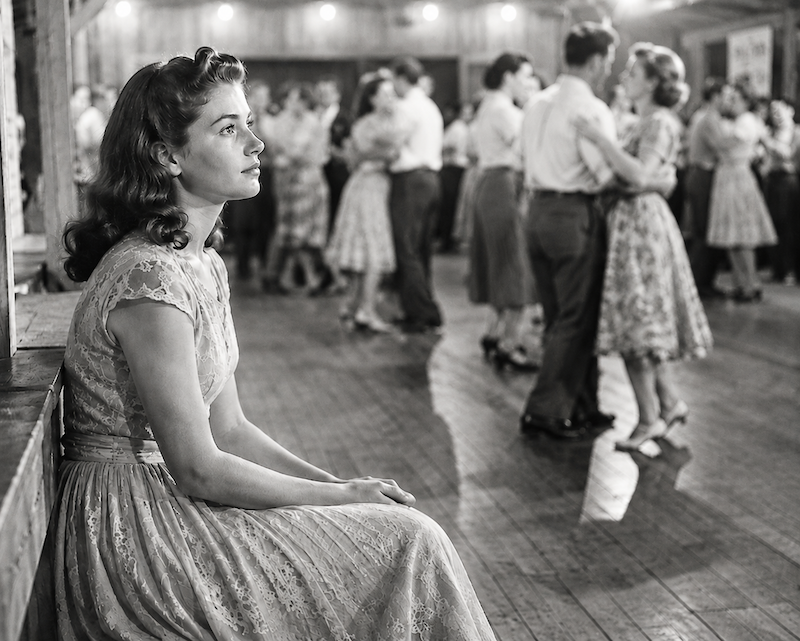
My mother’s generation had community dances.
Young women dressed as beautifully as they could, even when they had almost nothing. If they could not afford nylons, they drew a dark line down the backs of their bare legs with eyeliner and hoped nobody looked too closely.
Then they sat around the edge of the hall while the boys crossed the floor and asked them to dance.
I know that world was not necessarily kinder. It had its humiliations, its exclusions and its own rigid little cruelties. But attraction still happened in a room.
You could make eyes at someone’s actual eyes.
You could feel chemistry before either of you had assembled a list of interests. You could notice the way somebody moved, laughed, stood with their friends or became suddenly self-conscious when you looked at them.
You could invent a reason to cross the room.
You could pass close enough to leave a trace of perfume.
You could spend half an hour pretending not to watch someone who was pretending not to watch you.
The whole thing must have been unbearable.
And thrilling.
Once, attraction could begin across a crowded hall.
Now it begins with a thumb.
I first began online dating around 2000, close to the first wave of it, when the whole thing still felt vaguely pioneering.
At the beginning, I made a pact with myself.
I would always approach a date with optimism.
I would make an effort.
I would not arrive sarcastic, flat or already disappointed.
Partly this was for me. I wanted the chance of an interesting evening. I wanted to remain open to surprise.
But it was also for the other person.
I had already begun to understand how dispiriting it could feel to sit opposite someone who had decided against you before you had ordered a drink. I never wanted to be responsible for that. I did not want to piss on someone’s fireworks, or add one more dose of cynicism to a world already manufacturing it by the vat.
Every date deserved to meet the version of me who had arrived curious, generous and willing to be wrong.
I kept that pact for years.
That matters to me.
It matters because the eventual ending was not that I lost interest in love.
It was that I could no longer muster the state of mind required to look for it honestly.
The journey from optimism to flatlining was not graceful.
I did not wake one morning cured of hope.
I kept trying to restart the machinery.
I took breaks and returned.
I widened the search.
I told myself not to be unfair.
I reminded myself that every profile belonged to a real person who might be just as tired as I was.
I tried to distinguish between caution and bitterness.
I wondered whether I had become too difficult, too wary, too old, too unwilling to waste time.
Then I would return to the apps and begin picking my way through the liars, the people with wildly inflated ideas of their own appeal and the men who had apparently reached middle age without acquiring curiosity, manners or the habit of asking questions.
The experience did not become dramatically worse.
It became more of the same.
That was the problem.
The same photographs.
The same boasts.
The same evasions.
The same “separated” men.
The same declarations of emotional intelligence from people who seemed to regard empathy as a premium subscription feature.
There were also the fish.
So many fish.
Men holding fish, men kneeling beside fish, men presenting fish to the camera with the solemn pride of a minor royal unveiling a plaque. Somewhere along the way, a significant number of men had concluded that nothing stirred the female imagination like a dead trout held at chest height.
About a year ago, after being off the apps for roughly two years, I looked again.
I chose RSVP because you could search without committing to membership. I widened the radius to one hundred and fifty kilometres around my home.
One hundred and fifty kilometres is not a search.
It is a rescue operation.
And there they were.
The same faces.
The same profiles.
The same photographs.
The same old, same old, preserved beneath the glass like insects in amber.
Still no cigar.
They had survived two years, several federal budgets and, in some cases, apparently the continued absence of a recent photograph.
It should have been funny.
It was funny.
But only briefly.
Underneath the comedy was a kind of aching tiredness.
Not ordinary tiredness.
Not the tiredness that sends you to bed early or makes you leave a message unanswered until morning.
This went to the bones.
Online dating does not always break your heart dramatically.
It leaks you.
At first, the hole is so small you barely notice it.
A little optimism goes.
Then curiosity.
Then patience.
Then sexual energy.
Then the willingness to explain yourself one more time.
Then the appetite to get dressed, drive somewhere and discover that “emotionally intelligent” meant he once listened to a podcast.
It is like being in a boat where the fluid is not leaking in.
It is leaking out.
And the fluid is the good stuff.
Eventually, I realised that I could no longer keep my pact.
I had promised myself never to arrive at a date already disappointed.
In the end, I stopped dating because I could no longer keep that promise.
I could have continued, of course.
I could have gone through the motions.
I could have answered the messages, made the arrangements, selected the dress with just the right amount of cleavage, driven the distance and presented a polite imitation of hope.
But that would have felt dishonest.
Not to them.
To me.
So I quietly retreated.
I suspect many people do.
There is no dramatic announcement.
No farewell tour.
No final swipe conducted beneath a stormy sky.
You simply stop.
At first, you tell yourself it is another break.
Then enough time passes that the break acquires walls and furniture.
The strange thing is that what I miss is not really dating.
I do not miss assessing photographs, decoding profiles or trying to work out whether “recently separated” means six months, three weeks or since lunchtime.
I do not miss the introductory messages, the polite screening, the cafés, the bars or the drive home wondering whether you had imagined the whole possibility.
I miss breakfast.
I miss the light argument over who will make the poached eggs.
Whether we are having avocado.
Whether grated cheese on avocado and eggs is inspired or an offence requiring intervention.
One person making coffee and tea while the other stands over the pan.
Then both of us eating outside on the deck or patio, pleased with ourselves, perhaps reflecting on the wonderful sex we’d just had.
That is what the apps were supposed to lead to.
Not the date.
The afterwards.
The ordinary little life already underway.
Now I just make it for myself and eat it.
It is hard to mourn something that never quite happened.
There is no anniversary for the relationship you did not find.
No condolences for the breakfasts that never took place.
You simply notice, after a while, that you have stopped setting out two mugs in your imagination.
I do not know what became of the woman who began writing the book.
Perhaps she is still there somewhere, standing at the front of an imaginary night class with a whiteboard marker, explaining the importance of honesty in the age field.
I feel tenderness towards her.
She still believed that enough care, effort and truth might improve the odds.
She was trying to teach people how to build a better boat.
She had not yet realised there was a hole in it.