Questions: When a Decision Is Not an Answer
On an unexplained death, institutional uncertainty, and the smell that followed me home
4 July 2026
• 2504 words • 15 min read
Content note: This essay contains non-graphic descriptions of death and human decomposition.
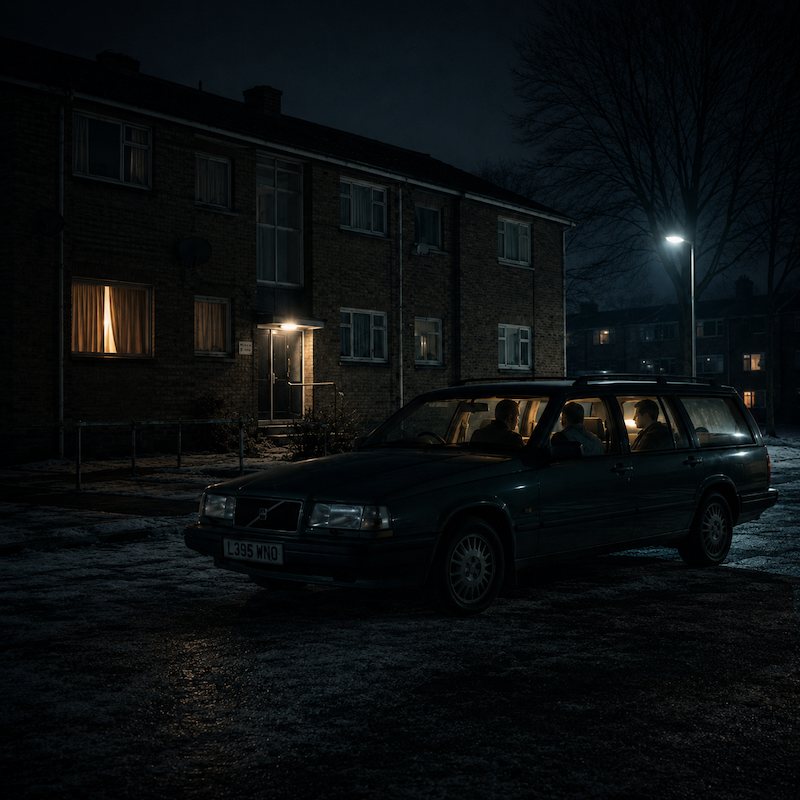
Chris and I were police officers on patrol in south-east London when the call came in.
Concern for welfare.
A man’s sister had not heard from him for a couple of weeks and had gone to his flat to check on him. She could not get inside.
It did not come through as a death. There was no warning in the message, no reason for us to arrive braced for anything worse than a locked door, an absent tenant or someone who had taken himself off without telling his family.
Chris was a friend throughout my time in the police. We worked well together and, when we were out in the car, we worked hard. That afternoon we happened to be nearby, so the call became ours.
The flat was on the ground floor of a small block near Croydon. It was January 1994, already late in the afternoon, and the light was beginning to thin.
Ian’s sister came towards the car as we pulled into the small car park outside. She had clearly been watching for us.
There was nothing remarkable about her appearance. She had short hair and wore jeans and a T-shirt. She looked like an ordinary woman who had gone to check on her brother and found herself standing outside his home waiting for the police.
She was upset, but completely rational. She was not crying, although she seemed close to it.
She told us Ian was dead inside the flat.
She had gone close to the window and detected the smell of decomposition. Only a trace had escaped the sealed flat, but there was no mistaking what it was. She was a nurse, or had been one. She knew the smell of death.
I had never smelled it before.
It seemed to me that she was trying to make her mind accept what her body already understood.
She wanted to be wrong even so.
The building was not particularly old by London standards, and the windows were relatively modern. They opened vertically, but only so far. There was no easy point of entry. Chris and I could force one open enough to reach through, but neither of us could fit through the gap.
We certainly were not going to send Ian’s sister inside.
Once the curtain had been pulled aside, we could see him.
Ian was lying on his back on the bed.
He had been dead for some time. Even from the window, it was obvious that decomposition had altered him profoundly. His face and body were badly swollen, and his skin had darkened so much that, at first glance, he appeared to be a different ethnicity. The bedding around him was deeply stained.
Ian was only in his late twenties.
Chris was an experienced officer, but a young man apparently dead inside a locked flat was reason enough for us to call a sergeant from the nearby station to assess the situation.
The sergeant was a slight man, small enough to squeeze through the window once it had been forced as far as it would go.
He lowered himself into the flat, disappeared behind the curtain and began making his way towards the front door.
Making his way was not quite the right phrase.
He stumbled across mountains of books, magazines, clothes and rubbish, treading on whatever lay beneath him because there was nowhere else to put his feet.
Eventually, the sergeant reached the front door and let us in.
The smell hit us with physical force.
Only a trace had escaped through the sealed window. Inside, it was overwhelming. It seemed to fill the flat as completely as the heat did, catching in the throat and settling immediately into our clothes and hair.
The sergeant looked at me.
“If you’re going to throw up, go outside.”
“No, I’m fine,” I said.
And I was.
The smell was sickening, but it affected everybody. What distinguished me in his mind was that I was young, female and new to the job.
Up close, more of Ian’s condition became visible. The skin along his back had begun to separate from the tissue beneath it, with dark fluid collecting underneath. It looked less like external bleeding than an enormous blister caused by decomposition. A T-shirt covered his torso, and his genitals were severely swollen.
Ian was a tall, heavily built man, barely contained by the bed.
The flat did not resemble the hoarders’ homes I would encounter later in life. However extreme the accumulation, people usually wear narrow paths between the places they need to reach: the bed, the toilet, the kitchen, the door. Ian’s flat had none. Moving through it meant stepping over bicycles, boxes, books and clothing with nowhere secure to place your feet.
That struck me as deeply strange even then.
You could barely cross it without risking an injury, let alone leave safely.
I did not know what that meant. I still do not. But even with less than a year in the police, I knew it was not ordinary.
The sexual material was not incidental. There were poppers, bondage photographs, masks and specialist BDSM magazines, some of them carefully stored and indexed in cupboards. Elsewhere, the material was mixed among the ordinary disorder of the room: clothing, books, bottles, paperwork and objects from everyday life.
That order was striking in a flat that otherwise looked as though it had been turned over. There were no clear paths across the floor, yet this part of Ian’s life had been catalogued.
It was 1994.
Sexuality outside a narrow idea of normality carried far more shame and secrecy than it does now. I do not know how Ian identified, what he did in private or whether any of it had anything to do with his death.
What was clear was that his family had never seen this part of his life.
His sister told us that Ian visited them at least once a fortnight. They lived some distance away, near Gravesend or somewhere in that direction. He went to them, but never invited anyone back to his flat. She had never been inside it before.
Whatever life Ian lived there, he had kept it separate.
The sergeant told her that she should not see him.
She insisted.
Perhaps her nursing experience made her believe she could manage it. Perhaps she simply needed certainty. Being able to tolerate the sight of a dead body, however, is not the same as wanting that body to become your final image of someone you love.
Chris took her in.
I hung back.
She looked at her brother and came out in shock.
After that, there was no reason for her to remain. She had brought us to Ian, told us what she knew and done the one thing she had been warned might stay with her. The flat was now in our hands.
The sergeant decided that Ian’s death had to be treated as suspicious until someone qualified could say otherwise.
That meant waiting for the Forensic Medical Examiner.
There were only a few FMEs covering a large area, and they were often tied up at other deaths. We were told it might take some time.
It did.
Chris and I were left to stand on premises, guarding the flat and making sure nobody entered or disturbed anything.
By then, the winter afternoon had become night, and it was bitterly cold. The flat remained behind us with Ian inside, the heating still on and the smell escaping now that the building had been opened.
We could not stay inside with him. There were no shops nearby, nowhere to buy a drink or something to eat, and no public toilets.
We could hardly use Ian’s bathroom.
Eventually, colleagues came to relieve us so we could return to the station. We ate, used the toilet and wrote up our notes before being sent back to take over again.
When we returned, the FME still had not arrived.
What had begun as a routine concern-for-welfare call had become a vigil with no clear ending.
We waited some more.
The FME finally arrived late that evening, perhaps eight or nine o’clock, possibly later, driving a large Volvo.
By then, the sight of any official car entering the car park felt like progress.
He went into the flat alone. He wanted the place to himself while he examined Ian and the room, so Chris and I returned to our position outside.
We waited.
And waited.
The FME remained inside for hours.
The cold deepened. The car park grew quieter. Behind the door, a doctor moved carefully through the wreckage of Ian’s private life, trying to read a body that decomposition had already begun to erase.
Outside, we had nothing to do but guard the entrance and watch the night get later.
When the FME finally emerged, he had concerns.
He thought there might be marks around Ian’s neck.
He thought there might be a bite mark on his penis.
But decomposition had altered the body too much for certainty. Swelling, discolouration and the breakdown of tissue had blurred whatever might once have been clear.
The FME told Chris and me what he had seen, but the decision was not ours to make.
The sergeant had to be contacted again. I believe he returned to the flat, although after more than thirty years I cannot be certain. What I remember clearly is the waiting, the telephone calls and the long conversations about what should happen next.
Our shift was due to finish at ten that night. By then, Chris and I should have been returning to the station, completing our paperwork and going home.
After further discussion, he decided that CID should determine whether Ian’s death was suspicious.
And so the question moved upwards.
Because the shifts were changing, it had to pass to the night-duty CID officers. They were not standing by waiting for us. They had to be contacted, briefed and sent to the scene.
The sergeant’s shift was ending too. He passed the decision to CID and left. Chris and I remained.
It was well after ten, bitterly cold and completely dark. Ian was still inside the flat. The FME had found enough to hesitate, but not enough to be certain.
Our shift had ended.
The night had not.
By then, we had been in and around the flat for hours, and the smell had settled into everything: our uniforms, our coats, our hair.
The smell of decomposition does not remain politely at the scene. It clings to fabric and follows people away.
Even outside, Chris and I could smell death on each other.
At some point, we climbed into the back of the FME’s Volvo to get warm and talk while we waited for CID.
I moved closer to Chris and recoiled theatrically.
“God, you stink.”
He did.
So did I.
We both knew it, and that was what made us laugh.
It was not that anything was funny. It was the kind of laughter that arrives when a night has gone on too long and become too strange to hold in any other way.
We sat huddled together in the back of a doctor’s car, long after our shift had ended, reeking of a dead man who was still lying inside the flat in front of us.
CID finally arrived in the small hours of the morning.
They went into the flat and examined the scene for themselves.
That took time.
Then they decided photographs were needed and sent for a police photographer.
That took more time.
By then, the night seemed to consist entirely of people arriving, looking, leaving to fetch someone else and making Chris and me wait for the next decision.
Inside, Ian remained on the bed while his death passed from one pair of hands to another.
Eventually, the two detectives contacted their sergeant.
The decision came back that Ian’s death would not be treated as suspicious.
Nothing new had happened.
No fresh fact had resolved the marks the FME thought he might have seen. No explanation had emerged for the state of the flat, the absence of paths or how a man in his late twenties had died there.
A decision had simply been made.
I had been in the police for less than a year. It was not my place to interrogate the decisions being made around me. I was there to preserve the scene, follow instructions and learn how these things were done.
The senior officers were supposed to show me how an unexplained death was handled properly.
I do not know that the decision was wrong.
Ian was profoundly decomposed. The heating had remained on throughout the days he lay there and throughout the many hours we waited. Moving him would not have been a simple or dignified operation. I remember feeling relieved that I would not be present when it happened, because I was not sure his body could be lifted intact.
To classify the death as suspicious would have meant preserving the scene for longer, involving more people and subjecting an already deteriorated body to further examination.
None of that proves the decision was made for convenience.
But I have often wondered whether convenience was in the room.
Whether the condition of Ian’s body, the disorder of the flat, the sexual material, the uncertainty and the lateness of the hour all made one conclusion easier to live with than the other.
His private life was exposed in exhaustive detail.
His death was examined, discussed and photographed, but never explained.
Chris and I were finally allowed to leave.
By the time I got home, it was nearly three in the morning. I ran a bath and stripped off every part of my uniform.
My socks and underwear. My trousers and shirt. My epaulettes and cravat. My jumper, Gore-Tex jacket and hat.
Everything had to be cleaned properly.
I put the uniform into a rubbish bag for the dry cleaners and washed myself, trying to remove the smell that had followed me home from Ian’s flat.
After a few hours’ sleep, I got up and dressed for work in an entirely fresh uniform.
But I could not get the smell out of my head.
At first, I assumed it was memory. I had spent so many hours surrounded by it that perhaps my senses had been trained to keep finding it, even after it was gone.
Except it was not gone.
The longer the morning went on, the more certain I became that I could still physically smell decomposition.
I checked my clothes. Everything was clean. I had bathed. I had washed my hair.
Eventually, I found it.
The smell was trapped in the scrunchie holding my hair back.
This was the nineties, after all.
I had cleaned every visible part of the uniform, right down to my socks and underwear, but overlooked one small circle of fabric.
The police had decided there was nothing suspicious about Ian’s death.
The smell stayed with me.