On love, alcohol, and the truths families learn to walk around.
22 July 2026
• 3,570 words • 21 min read
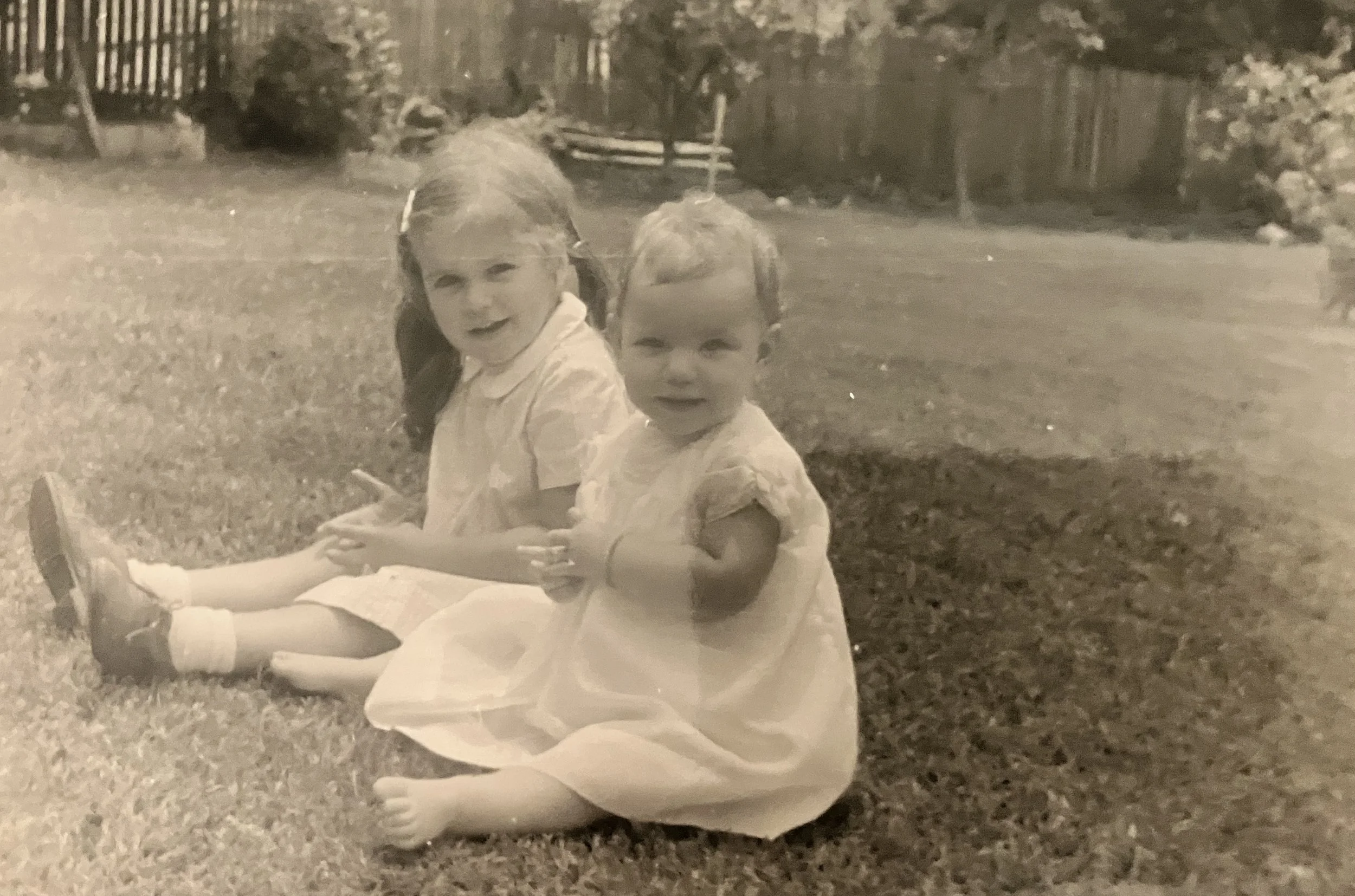
We talk about my sister’s drinking often. We simply do not talk about it to her.
The conversations happen afterwards, or elsewhere. On the phone. In kitchens she is not standing in. Between relatives who have all seen enough to know what the others mean without much explanation. Nobody proposes an intervention. Nobody volunteers to be the one who finally says it plainly. We compare notes, express concern, sometimes frustration, and then return to the family arrangement: she drinks, we adapt, and the truth waits outside.
This silence is easy to mistake for kindness. My sister is extremely sensitive, and when she feels criticised she can become defensive, cruel or inconsolable. Nobody wants the drama. Nobody wants to wound her. Nobody wants to turn a family gathering into another story we will later discuss without her.
Besides, she is lovely.
She is also unusually tender-hearted. Sadness reaches her quickly. She cries over the people she has lost, over things that happen to those she loves, sometimes over pain that is not even hers. Her emotions sit close to the surface.
She is kind and sentimental and generous. She tells me she loves me. She rings when I send her photographs of the plants and flowers she gave me. When I needed care after surgery, she drove five hours to be with me.
I cannot remember when the family silence began. I can remember when I first understood there was something to be silent about.
I was twenty-two and living in England. My sister is eighteen months younger than I am, and because I worked for an airline, I could travel back to Australia cheaply. On one of those visits, we stayed with my mother and her new husband and the four of us went out for dinner.
My sister had already been drinking, I think. She certainly drank a great deal over dinner. By the end of the meal, she was very drunk and determined not to go home. She persuaded me to go dancing with her instead.
At the club, the bouncers hesitated. She was visibly intoxicated, and they did not want to let her in. I spoke up for her. It was a line-ball decision, but eventually they waved us through.
Inside, she danced by herself, completely absorbed, as though the rest of the room had fallen away. I could not be persuaded to join her and watched from the side. She was not simply merry or uninhibited. She was somewhere else entirely.
I had been drinking too, but watching her sobered me up. Somebody had to remain in the room, and it was suddenly clear that the somebody was me. I spent the rest of the night looking after her and trying to contain my embarrassment.
What unsettled me was not only how much she had consumed. It was how far alcohol could take her. If I drank too much, I became sick. My body stopped me. Hers seemed to open another door.
I went back to England afterwards and continued with my life. The distance made it easy to believe that whatever I had seen belonged to one wild night, or to youth, or to a phase that would eventually pass.
It did not pass.
Not long afterwards, while I was still living overseas, the family gathered for one of my maternal grandmother’s milestone birthdays. Relatives travelled from far and wide for the celebration. Even one of my cousins came from San Francisco. I was one of the few who could not be there, but the story reached me quickly and from several directions.
The cousins had gathered, drinking and catching up. My sister became extremely drunk. At some point, she flagged down a passing biker, climbed on behind him and disappeared.
I do not think my mother saw it happen. Had she done so, she would have been beside herself, and I doubt my sister would have attempted it under her gaze. But the cousins saw, and afterwards the story moved through the family.
It was so far beyond anything the rest of us could imagine doing that it became one of those incidents everyone remembered. By then, the concern was no longer confined to the immediate family. The extended family had begun recognising the pattern too.
The conversation followed what would become its permanent route: around my sister, never towards her.
Everyone had a story. Nobody had the conversation.
Part of the difficulty is that my sister is not unpleasant to be around. Quite the opposite. Sober, she is warm and funny. She cares fiercely about her family. She notices things. She remembers birthdays.
Then she crosses a line.
I can usually hear it within a few words on the telephone. Her speech changes. Everything becomes slightly enlarged. A small feeling becomes a grievance. A harmless remark acquires an insult that nobody else can hear. At a table full of people, conversation can be moving along perfectly well when she suddenly withdraws, or throws out a cutting comment, wounded by something that was never said.
Nobody knows quite what has happened, but everybody feels it. The room tightens. Conversation becomes careful. My brother and I go quieter without needing to look at one another. Someone finds a reason to go to bed.
By then, there is no useful conversation to be had. Any concern sounds like criticism. Any attempt to explain becomes an attack. She can be rude, accusatory and startlingly cruel, then wake the next morning and continue as though nothing happened.
She has never once apologised to me for the worst things she has said while drunk. I do not know whether she remembers them, cannot bear to remember them, or simply believes the night has erased itself.
The rest of us have learned to erase it with her.
For a long time, I remained partly outside it. I was living in England, building a life of my own, and the distance protected me from the day-to-day reality of my sister’s drinking. I heard the stories when they travelled across the world to me, but stories have edges. You can listen, be shocked, and then return to whatever you were doing before the telephone rang.
When I came home to Australia at the end of 1999, the distance disappeared. So did the possibility of treating each incident as an isolated piece of family folklore. I began to see not only how much she drank, but what happened to the people around her once she had gone too far.
The danger was not always dramatic. Sometimes it was physical. More often, for me, it arrived in words.
One evening, we were drinking on my mother’s patio on the South Coast of New South Wales. My sister had gone well beyond the point at which she remained fully present.
At some stage, she wandered down into the front garden and began dancing on my mother’s brick letterbox. Then she simply fell from it, face-first. Her boyfriend ran to help her, and somehow she was not badly injured. Over the years there would be chipped teeth and other consequences from falls like that, but that night she got up.
What stayed with me was not only the fall. Later that evening, she turned on me with a venom I had not expected and could not understand. I had only just come home after years in England. I remember being stunned by the cruelty, and by the precision of it. She seemed to know exactly where to place the words so they would hurt most.
This became one of alcohol’s cruellest tricks. It did not make her indiscriminately unpleasant. It made her intimate knowledge of me dangerous.
That evening was not memorable because it was unique. It was memorable because I was beginning to understand the pattern.
About ten years ago, the family gathered at my mother’s house for her birthday. Mum was preparing dinner in the kitchen. My sister and I sat beside each other on stools at the bench.
She had arrived before me. The moment she came down the hallway, I saw it in her eyes and felt myself groan inwardly. She had already passed the safe point.
She sat beside me and began needling almost at once. At one stage, she started physically poking me. I was going through a brutal divorce at the time, and when Mum asked what was happening in my life, my sister cut in.
“We don’t always want to know what’s going on in your life,” she said.
It began there and became steadily nastier. I no longer remember every word, but I remember the familiar sensation of being opened up by someone who knew exactly where the tender places were.
This time, something in me refused.
I stayed long enough for the meal, or most of it, but I left before the evening was properly over. Soon afterwards, I made a decision: I would no longer attend family occasions where I was expected to absorb that treatment and pretend it had not happened.
My mother later called me over for a talk. She wanted me to make peace with my sister, partly for her sake. The appeal carried the unmistakable weight of emotional blackmail: if I cared about her, I would do this. I would swallow what had happened, restore the family peace and relieve my mother of the pain of having two daughters who were not speaking.
I remember saying that if my husband had spoken to me in the way my sister did when she was drunk, nobody would have hesitated to condemn him. Yet because it was my sister, I was expected to understand, forgive and return to the table.
I had spent too long being told, in one form or another, that another person’s cruelty became my responsibility once it upset the family. I could not do it again.
My sister and I did not speak for several years.
Eventually, I wrote to her. Life had begun to feel too short for a silence of our own making, and I wanted to find a way back without simply stepping into the same pattern again. At the time, I was working for a psychologist, and I suggested that we have counselling together.
She replied warmly. She was genuinely pleased to hear from me and eager for us to repair the relationship. But she also believed we could get past it without the trouble of counselling.
I did not.
The problem was not that we had misunderstood each other once. The problem was that something happened repeatedly, and neither of us was naming it. I could not see how goodwill alone would protect us from returning to the same place.
More letters passed between us. Counselling never happened. The drinking was never mentioned. Gradually, we found our way back into family occasions and phone calls and the ordinary traffic of sisters.
Something had changed, though.
She still drank heavily, but around me she seemed to stop short of the point where the cruelty began. I had drawn a line, and somehow she had seen it, even though we never spoke about what the line was made of.
Our relationship resumed. The truth remained outside it.
Today, my sister believes we are close, and in many ways we are. We speak on the phone. We laugh about childhood memories. We still use a ridiculous accent we invented years ago. She tells me she loves me, often and easily.
A few hours before I began writing this, I sent her photographs from my garden: new daffodils, and the little daphne she gave me, now flowering beside the church. She texted back, then rang.
“We’re just going up to the pub for a couple of beers,” she said.
She always says a couple of beers.
I sometimes answer, “That’s not like you,” lightly enough for it to pass as a joke. She gives a small laugh, or says nothing, and the moment moves on. We both know I do not mean it. Perhaps only one of us knows how sad it makes me.
For my sister, a couple of beers has never meant two beers. Even when she is being careful at my house, it can mean a six-pack followed by a bottle of wine. She does not talk about cutting down. She does not joke that she drinks too much. To my knowledge, she has never called herself an alcoholic. It is simply what happens next.
This is partly why the problem is so easy to live around. She is not the collapsed figure people summon when they hear the word. She works. She is reliable. She is a grafter. She keeps going. There is always enough outward competence to help everyone doubt what they can plainly see.
When I had surgery on my foot, she could not wait to come and care for me. She drove five hours, arriving with her car full of plants from the garden section where she works. She was delighted to see me. She brought gifts, time, tenderness and the unquestioning practical love of a sister who genuinely wanted to help.
She had not been in the house an hour before she opened a beer.
Neither part of that story cancels the other.
When she stays, she buys beer by the slab. Sometimes another follows, depending on the length of the visit. When she leaves, there may be a dozen cans still stacked in the cupboard and several more in the fridge.
“What about all your beer?” I ask. “You know I don’t drink it.”
“I’m better off leaving it here,” she says, quite seriously. “I don’t want to be tempted to have one on the way home.”
This is not the forgotten tail end of a six-pack. It is enough beer to make its presence felt in a house where nobody drinks it. She recognises that danger clearly enough to leave it behind rather than risk temptation on the drive home. Then the larger understanding closes again.
This is the strange shape of our closeness. She feels free to tell me she is heading to the pub because I do not lecture her. I do not pick fights. I do not confront her once her speech begins to change. I simply speak less. I become careful.
She thinks our relationship is close and uncomplicated because I have carried the complication for both of us.
Recently, that complication followed me into a conversation about Ireland.
I am planning to travel there in November, alone. It is something I have thought about for months, a journey I want to make on my own terms and in my own company. When I mentioned it to my sister, she later suggested that she might come with me.
I answered quickly.
“No, not this trip. I want to do this one alone.”
She seemed to understand, and the conversation moved on. What unsettled me came afterwards, when I imagined my brother making the same suggestion. I knew my response would have been completely different. I would have been delighted. I would have started making plans.
My brother has not asked to come. The comparison is entirely hypothetical. But that did not make the truth inside it any less real.
What I told my sister was true. I do want to travel alone. It simply was not the whole truth.
The whole truth is that I would not want to travel with her because alcohol would come too.
I know how the days would bend around it. A pub would become not one part of the experience, but a destination with its own gravity. A celebration would become permission to drink more. Evenings would lengthen. Strangers with the same appetite would become instant companions. The speech would change. The sensitivity would arrive. The air would tighten.
I would stop experiencing Ireland and start managing my sister’s experience of Ireland.
There would be nowhere to go home to, nowhere to leave early from, no easy way to step out of the evening once the familiar pattern began. A journey I have imagined as expansive would contract around the same old problem.
So I said I wanted to go alone.
It was not a lie. It was an edited truth.
The edit protected her feelings. It also protected me from the conversation I did not want to have.
Why is it easier to deny someone a place in your life than to tell them what has made the denial necessary?
In our family, the answer is simple: honesty has consequences. My sister is highly sensitive to criticism, and alcohol makes that sensitivity volatile. A concern can become an insult. A boundary can become betrayal. A conversation can become a scene.
Nobody wants the scene.
So we choose the quieter injury. We leave early. We speak less. We wait until she is not there and then say what everyone already knows. We preserve the evening and damage the relationship by degrees.
Perhaps this habit did not begin with her. Our father drank too, and when he drank spirits he could become dramatic and vicious. An ugly mouth has a long afterlife in a family. You learn to sense the shift before it fully arrives. You learn which truths are combustible. You learn that peace depends upon somebody swallowing something.
My mother has spoken to my sister about her drinking over the years, I think, but she has also denied its extent. She has told me that my sister does not drink like that anymore, only to be shocked when I describe what I have seen. Perhaps denial is how my mother protects herself. Perhaps my sister tells her what she needs to hear.
My brother and I recognise the moment without discussing it. We do not need to exchange a look. The knowledge is already shared.
The extended family shares it too. My cousin mentions the drinking when we meet. Others have their own stories. Everyone knows. Nobody has ever suggested that somebody should sit down and tell her.
We do not fail to have the conversation because we cannot see the problem. We fail because we can see the cost of naming it.
But silence has a cost too.
It allows her to remain outside the complications I have been carrying. It allows the family to call avoidance kindness. It leaves all of us privately honest and publicly false.
And it leaves her outside the one conversation that has shaped so many of our choices.
When is the right time to tell someone something they have spent a lifetime making impossible to say?
Not once she has been drinking. By then, the conversation would have nowhere useful to go. Concern would sound like criticism. Memory would become unreliable. The whole thing would risk being folded into another grievance and carried away from its point.
Nor first thing the next morning. She has her routines then: coffee, cigarettes, her phone, the quiet recovery of herself. I do not know whether she is hungover, ashamed or simply moving on. I only know that the night before is rarely mentioned.
There is always a reason not to begin.
My son, who is young enough that I did not expect him to have much to offer on the subject, surprised me. When I described the dilemma, he said I should sit down with her and have the conversation.
The simplicity of that answer exposed the complexity I had built around it.
Perhaps he is right. Perhaps the only honest way forward is to say, plainly and while she is sober: I love you, but alcohol has made me afraid to make certain plans with you.
I do not know whether such a conversation would change anything. I do not know whether she would hear love, accusation or betrayal. I do not know whether honesty would open a door or simply give us a new wound to walk around.
But I am beginning to understand that avoiding the conversation has not kept our relationship simple. It has only made the complication invisible to her.
I have cried while writing this. I cry when I read it back. Not because I regret telling the truth, but because the truth is that I love her.
She has shown me love in a hundred practical ways. She has driven long distances to care for me, arrived bearing plants and gifts, and given me her time without hesitation. None of that is false. Neither is the drinking.
Both things are true.
She is the sister who tells me she loves me, who makes me laugh, who still speaks to me in the ridiculous accent we invented as girls. She is also the person whose drinking can make a room contract, a conversation become guarded and an invitation disappear before it is ever properly offered.
Love does not require me to divide her into two women. It requires me to stop pretending I have only known one.
Perhaps honesty begins there.
Not with an accusation. Not with a catalogue of damage. Not with a demand that she become someone else.
With the truth, spoken without disguise:
I love you.
I am afraid of what alcohol does to you.
And I can no longer carry the complication for both of us.