Imprint: On Bodies, Memories, and Everything That Stays Without Permission
A beginning-of-year meditation on memory, touch, and everything that lingers.
22 January 2026
• 1,497 words • 9 min read
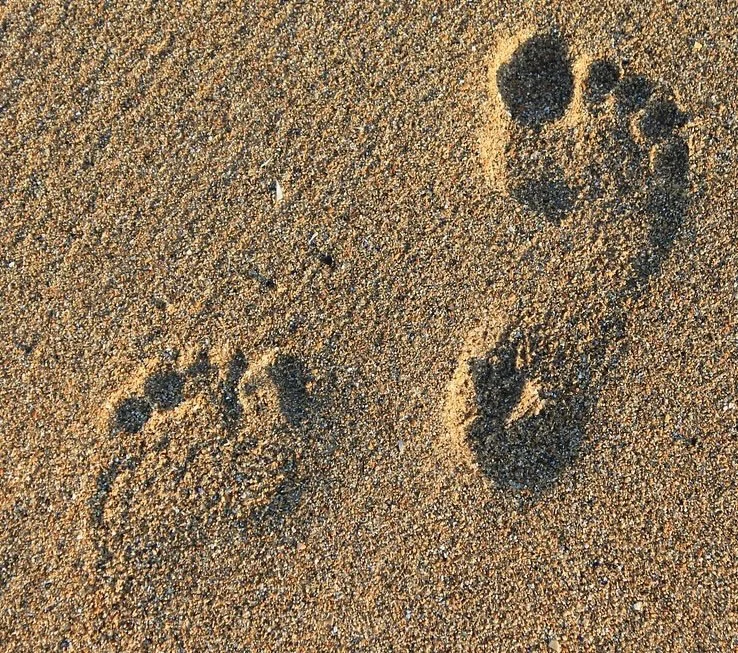
Image by Dave Bicker from Pixabay.
Being alive in a new year is a strange kind of diagnosis.
Not an illness, exactly — more a collection of recurring symptoms nobody warns you about. You wake up on January 1st thinking you’ll feel new, and instead you discover that your inner landscape is still carrying the fingerprints of everything you lived through, loved through, or dragged yourself through last year.
Symptoms of Being Imprinted in 2026 may include:
• sudden clarity at wildly inconvenient times
• nostalgia ambushing you in supermarket aisles
• longing shaped like someone you never actually had
• an urge to reinvent yourself between sips of lukewarm tea
• the quiet suspicion that you're not done becoming
• tenderness you can’t explain
• hope you can’t quite kill
• and the sense that your body remembers things your mind swears it’s forgotten
If any of these resonate… congratulations.
You’re still human, still healing, still carrying the echoes of the people and moments that left their mark on you — whether gently or with a slam.
And this, inconveniently, is where the new year really begins.
The trouble with imprinting is that half the time you don’t know what’s marked you until something brushes against it. A song in a café. A stranger’s laugh, shaped exactly like someone you once loved. A scent that drags you backwards before you can brace for impact.
New years aren’t fresh starts — they’re lab reports. They show you what’s still tender, what’s still unresolved, what still has teeth.
Sometimes it’s beautiful.
Sometimes it’s maddening.
Sometimes it’s like discovering a bruise you can’t remember earning.
What nobody tells you is that imprinting isn’t just about people. It can be places, mistakes, tiny kindnesses, a look that lasted half a second too long. The things that stay aren’t always the things we choose — but they shape us anyway. We collect these invisible fingerprints like evidence in a case we never quite close.
And then there are the… more physical imprints.
The ones on skin.
The ones on memory.
The ones you don’t speak about at dinner parties because they were fleeting or forbidden or brilliant in a way that broke you open a little.
Those imprints matter too.
They remind you that you were once desired, or daring, or stupidly brave. They remind you that you had a pulse — and not just in the medical sense.
This year, maybe the trick isn’t to start fresh.
Maybe it’s to pay attention to what’s still echoing inside you, and ask why.
Sometimes an imprint arrives in the most inelegant way possible — in my case, by accidentally opening the wrong note in my phone. I’d been looking for something mundane (a reminder, a list, a sentence I meant to steal from myself later), and instead I found him. Or rather, a version of him I’d forgotten existed: open, unguarded, overflowing. A love note so alive it felt hot to the touch. And what undid me wasn’t the erotic flourish — though God knows he was good at those — but the shock of remembering that once upon a time, someone saw me with that much wanting. I’d forgotten how we were. I’d forgotten why losing it hurt. That’s what an imprint does: it reminds you that the body keeps score even when the mind has filed everything under “ancient history.”
It’s funny — the body remembers things the mind has politely agreed to forget. A lover’s breath against my neck, the particular rhythm of a hand that once knew exactly what to do with me — these scenes flare up sometimes, sharp as matchlight, when I’m alone and touching myself and not pretending to be anywhere else but inside my own skin. It isn’t about wanting them anymore. It’s about wanting the feeling of being known.
And then there are the other imprints, the gentler ones — a stranger helping me lift wine bottles into a basket on a day when my hands wouldn’t behave, or an old woman in Woolworths telling me I was doing a wonderful job when my son was still a warm, blinking newborn. Tiny kindnesses burn themselves into you just as deeply as sex ever did. Maybe deeper. Maybe they’re the same thing, in their own way: a moment when someone sees you without you having to perform being a person worth seeing.
But for every imprint that feels like being seen, there are others that feel like being left behind.
There’s a kind of loneliness that doesn’t announce itself.
It just… shows up in the body.
In the way an old touch flashes behind your eyes at the worst possible moment.
In the way grief lives in places your hands remember before your mind does.
I used to think this meant I was broken — that revisiting memories, or letting them visit me, was some kind of personal failing. But recently I’ve realised it’s just evidence. Proof that something once mattered enough to leave a mark.
What I’m learning — slowly, reluctantly — is that loneliness isn’t always a lack.
Sometimes it’s a perimeter.
A soft fence around the parts of me that have been touched too deeply to ever go back to sleep.
It’s strange comfort, in its own way.
A reminder that my capacity for feeling is still intact, even when the rest of me feels frayed by time or illness or the peculiar ache of trying to build a life from scratch again and again.
These small hauntings — the ones stored in the body rather than the mind — they aren’t there to pull me backwards.
They’re simply the proof that I’m still made of something warm.
Sometimes I think the only cure for all these imprints — the lovers, the losses, the tiny kindnesses that live rent-free under my skin — is to put my body somewhere it’s never been before.
Somewhere that doesn’t know me.
Somewhere cold enough to shut me up and warm enough to soften me at the same time.
A cliff-side cottage in Ireland feels like the right kind of madness.
Wind that demands something of you.
Grey skies that don’t apologise.
Room to hear yourself think — or to finally stop thinking altogether.
I want to know who I am when the familiar scaffolding falls away.
When it’s just me, a fire that crackles like it’s judging my life choices, and the Atlantic howling at the windows like it’s reminding me I’m small but still here.
Maybe I’d cook soups. Maybe I’d write. Maybe I’d cry into my jumper for reasons that have nothing to do with heartbreak and everything to do with thawing.
And maybe — if the old gossip in the village shop has been running her mouth — a man with broad shoulders and quiet manners might knock on the door with a bag of firewood or fresh bread, pretending it’s an errand but really checking whether the strange Australian woman is coping with the weather.
Flannel disguised as neighbourly concern.
The best kind.

The kind of solitude that lets old imprints loosen their grip.
But that’s only one possible imprint the year might leave.
Another is far closer, far sharper, far less romantic:
surgery.
A month from now, I’ll be lying under bright theatre lights while someone works on the body I’ve spent years trying to make peace with.
It’s a different kind of cliff-edge — one that doesn’t come with sea views or handsome neighbours.
It’s the kind where you hand yourself over, literally, and hope to wake up on the other side feeling more like yourself, not less.
That, too, is an imprint.
The medical kind.
The brave kind.
The kind you don’t fantasise about but face anyway, because living in your body sometimes requires renegotiating the lease.
And then there’s the subtlest possibility of all:
that what I’m seeking might be found close to home.
In the quiet shift of my own habits.
In the way someone at the supermarket meets my eyes with unexpected kindness.
In laughter I didn’t see coming.
In desire that shows up on an ordinary Tuesday.
In small, local tendernesses that don’t need cliffs or wind or reinvention to matter.
Maybe the new imprint isn’t a dramatic escape. Maybe it’s a soft recalibration — a widening.
A willingness to notice what’s already here.
So no — I don’t want to scrub the imprints away. They’re my evidence. My cartography.
Proof that I’ve been touched, chosen, hurt, held, undone, carried, surprised. Proof that I’ve lived.
If anything, 2026 feels less like a year to reinvent myself and more like a year to tune in — to pay attention to whatever leaves a mark next.
Whether it’s the sting of cold Irish wind, the bright antiseptic light of a surgical theatre, …or the warmth of a stranger steadying my hands when they were trembling for reasons no one else could see.
I don’t need a clean slate. I need a life porous enough for new imprints — the gentle kind, the bold kind, the kind that rewrite the day in some small, necessary way.
Maybe that’s the real resolution: to stay open enough that when tenderness knocks — in whatever form it chooses —
I’ll recognise it.
And let it in.
Even if it arrives wearing flannel
and pretending it’s just dropping off firewood.