Gaslit: The Longest Two-and-a-Half Hours of My Life
A cautionary tale about trusting trailers and gold statues.
7 December 2025
• 1,511 words • 9 min read
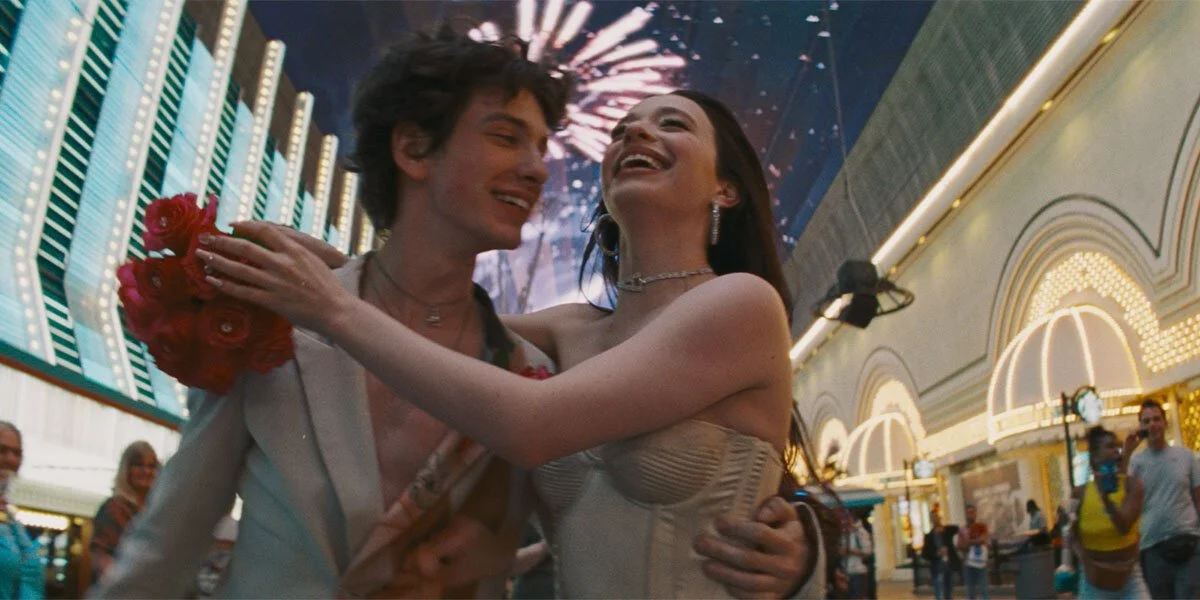
Anora, the Oscars, and the Art of Being Underwhelmed
Last night, at a completely irresponsible 11:30pm, I pressed play on Anora.
Why?
Because the Oscars told me to. Yes, I’m months late to Anora, and no, that didn’t save me.
Anora won five Oscars this year, including Best Picture. Best Picture isn’t an iron-clad guarantee of awesomeness, but it puts a movie in company with paragons such as Parasite, Spotlight, 12 Years a Slave, Slumdog Millionaire, Crash and American Beauty.
And like an idiot, I listened.
Two and a half hours later, I was staring at the credits like someone who’d been stood up on a date but still had to pay for dinner.
Let me start with this:
If you loved Anora, I admire your stamina.
If you didn’t… welcome. Pull up a chair.

Peak fun-and-games energy: enjoy it, because it doesn’t last.
The Hype Problem
I didn’t even know Anora existed until two days ago. I was researching screenplay competitions (as one does when procrastinating), landed on the Academy website, and suddenly there it was — glowing, crowned, unavoidable.
So I watched the trailer. Fast-paced, chaotic, youthful, sex-workers-in-Brooklyn energy — not my usual cinematic home, but intriguing. It promised momentum, personality, maybe grit with a heart.
And here’s where expectations matter, because trailers lie — and sometimes films do too.
The Premise vs. The Experience
The setup has bite:
Ani (or Anora) — a young Brooklyn stripper/sex worker
Ivan — a catastrophically wealthy Russian man-child
They impulsively marry
His oligarch parents descend to fix what they consider a PR disaster
There’s potential there — class collision, identity, agency, survival, the transactional nature of modern love.
But instead of exploring it, the film spins in circles.
After Ivan flees and leaves Ani to face the fallout, the story doesn’t deepen — it just gets louder. The arguing, the breaking things, the chaotic searching, the “you don’t understand”— repeat, repeat, repeat. Scenes stretch well past their emotional peak until they become noise.
I found myself pleading, “Yes, we get it. Move on.”
But the film doesn’t move on. It stalls — and calls that realism.
I love messy humans. I’ll follow damaged characters anywhere — if they’re becoming something, resisting something, revealing something.
But here?
Ivan is a spoiled brat who will always land on a cushion of money.
Ani (Anora) is sympathetic, yet strangely underwritten.
The parents are caricatures of cold power.
The guy she briefly attaches herself to toward the end (Igor)… exists because the plot needed transportation.
Nobody evolves. Nobody learns. Nobody surprises us.
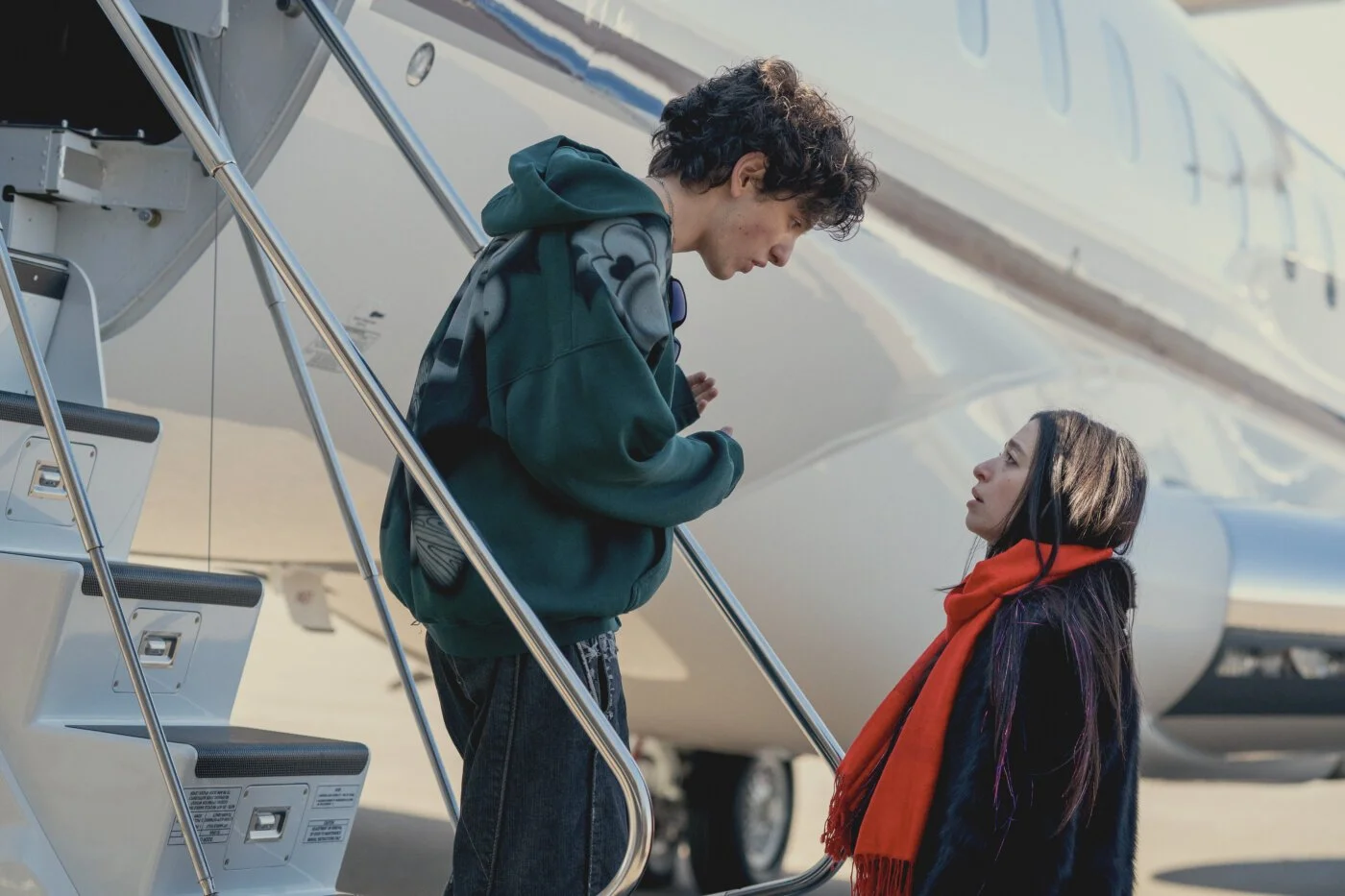
Nothing says ‘romance’ like being talked down to from the step of a private jet.
There was one moment where I thought, “Ah — here it is, the film’s hidden depth.” Up to that point, Ivan’s sex style is the frantic, performative kind you’d expect from a boy who learned everything from pixelated videos and zero real intimacy. But after the wedding, when she quietly asks him to slow down, something actually shifts in him — a surprised softness, as if it’s the first time it’s occurred to him that sex can feel better than performance.
For a brief, shining second, it was a glimpse of a more interesting film — a spark of humanity, mutuality, something real. And then, like everything else in Anora, it flickered once… and vanished without consequence.
The sex insight is a momentary surprise.
It hints that something real was possible — connection, awareness, intimacy — and then the film does what too many men do with emotional breakthroughs: drops it on the floor and walks off.
By the end, Ani is on top of Igor in the car — a scene that plays less like passion and more like someone choosing the least terrible option available. It’s not intimacy; it’s emotional triage.
And the only relationship I did care about — the ongoing interaction between Ani and her red-haired fellow sex worker — appears, glimmers with life, then disappears. That could’ve been the film. Instead, it’s a footnote.
Sparks on a rainy day. Lovely to witness, impossible to keep lit.
The Title Promises Meaning — The Film Never Delivers It
For a movie named after its protagonist, Ani remains curiously unexamined.
If a film is named after a character — Erin Brockovich, Carol, Amélie, Tár, Milk, Ali, Jackie, Frida, Ray — the implied contract is:
this person is extraordinary
or their ordinary life reveals something extraordinary
or the world changes because of them
or we will see inside them so deeply that we understand humanity differently
But Anora is:
not self-aware
not transformative
not surprising
not architect of anything
not even emotionally revelatory
She doesn’t do anything — things simply happen around her. Not due to the actress (Mikey Madison is doing absolutely everything she can), but because the script gives her little complexity to work with. She is acted beautifully but written thinly. A film with her name on it should reveal who she is, why she matters, and what she understands that the rest of us don’t.
Instead, she remains stuck at surface level, swept along by louder forces, without any internal revelation to anchor the chaos.
There’s no agency = no catharsis.
And therefore: The film fails its own title.
The Pacing: A Masterclass in How Time Can Actually Slow Down
The first 45 minutes?
Fine. Interesting even.
Certain sequences — like Anora dealing with the fallout after Ivan leaves (breaking furniture again and again and again), or the search for Ivan, phone photo held up like a wanted poster — go on and on and on and on. Not escalating, not unraveling, not revealing — just repeating.
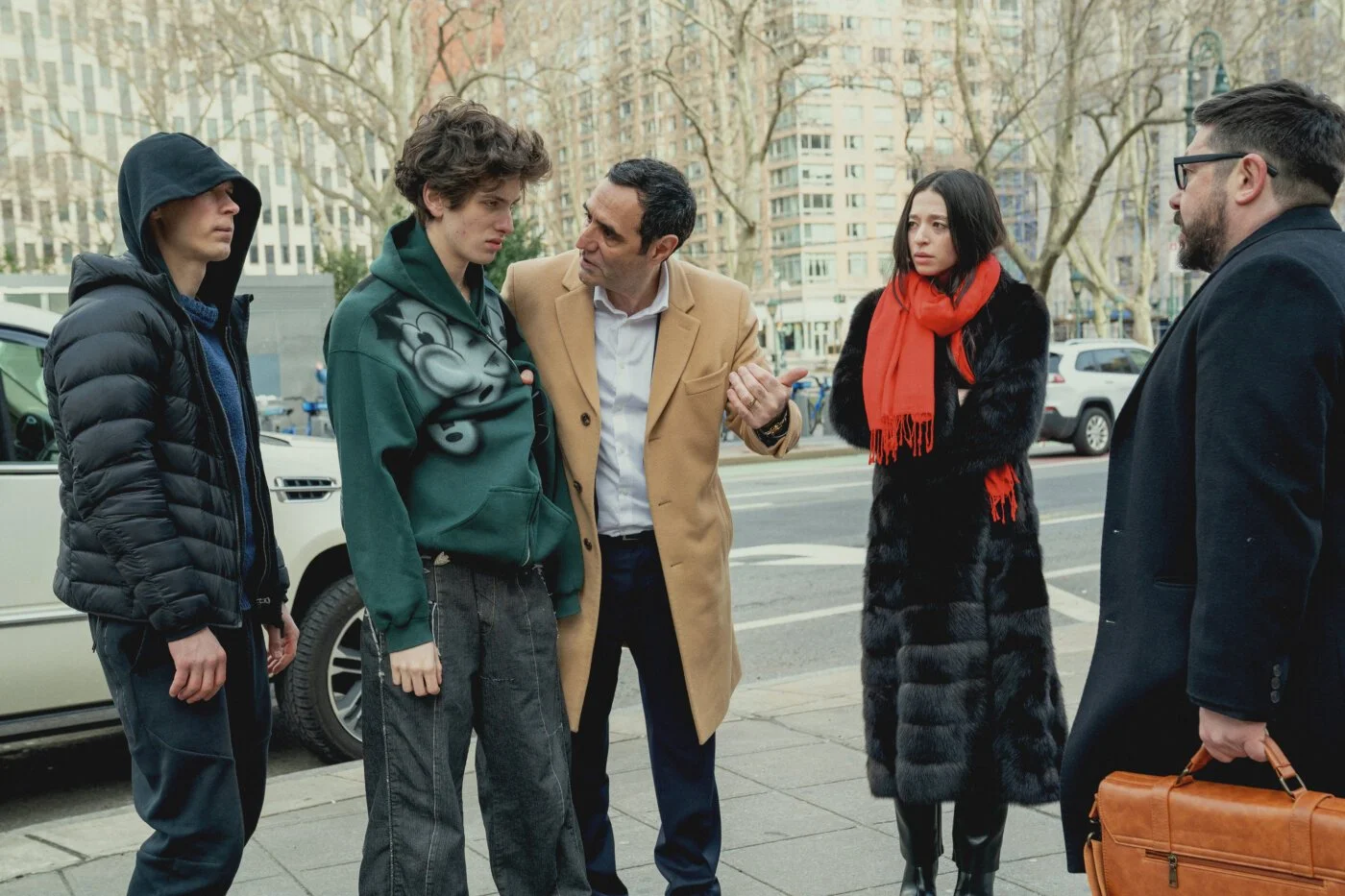
At this point, even Ani’s scarf looks exhausted.
And because I was watching on Binge, pausing didn’t help. Instead of a timeline bar, you get a giant pause symbol over the screen, so I had no idea how much suffering remained. I felt like a hostage, waiting for brilliance that never arrived.
That’s not tension — that’s endurance.
You know how Good Luck to You, Leo Grande manages to keep you riveted with just two people in a room?
Well, Anora manages the opposite with 200 people, a cityscape, several limousines and a private jet.
The Big Question: What Was This Film About?
A film doesn’t need a tidy moral, but it does need intentionality.
By the end, I wasn’t pondering the meaning of it all — I was wondering why I’d waited two and a half hours for it.
It promises one genre — energy, wit, a chaotic romance — but delivers another:
a slow-moving, repetitive argument stretched across Brooklyn and beyond.
And there’s no catharsis, no illumination, no emotional payoff.
Just a fade-out that feels less like a conclusion and more like someone finally pulling the plug.
So What Was the Point?
Some critics insist the emptiness is the message — love as transaction, youth ground down by money, survival stripped of anything resembling romance.
I don’t disagree with the interpretation — I disagree with the experience.
A film can be bleak and still compelling (Carol).
Chaotic and still intimate (Black Swan).
Brutal and still layered (Whiplash).
But Anora feels observational without being insightful, raw without being revealing, emotional without offering emotion.
It’s a slice of life without a meal attached.
Ani looking for meaning; Ivan looking for the next distraction.
Then Why the Oscars?
Because awards bodies sometimes reward ideas rather than impact.
Because bold filmmaking often gets mistaken for good filmmaking.
Because kinetic camerawork and social commentary can be enough to dazzle a voting panel.
And because hype is a self-feeding organism.
Once enough people say a thing is genius, the rest tend to nod along.
Meanwhile, some of us sit there at 2 a.m. muttering,
”Really? This? This is the one?”
And let’s be honest — awarding a film about sex work, immigration, power, class disparity, and commodified youth makes the Academy feel culturally relevant.
But cultural relevance doesn’t automatically equal storytelling power.
Winning Best Picture doesn’t mean it’s universal — only that enough voters admired what it attempted.
Does Disliking It Mean I “Missed” Something?
No.
What resonates with you isn’t a measure of virtue.
Seeing things differently is natural, not wrong
Your emotional response is a clue, not a judgement.
I love films about longing, interiority, memory — In the Mood for Love, Carol, Made in Heaven, Her, Eternal Sunshine of the Spotless Mind — stories that take human experience seriously.
Anora didn’t.
And that’s fine — for the people who connect with it.
But for me? It felt like watching strangers argue in a restaurant while waiting for my food.
Final Thoughts
In the end, Anora reminded me of something no critic, no Oscar voter, and certainly no trailer would ever warn you about: sometimes a film can be loud, fast, provocative, and still strangely hollow. Sometimes the world crowns a movie while you sit there, rubbing your temples, wondering if you accidentally watched a different cut. And that’s okay. Cinema isn’t a moral exam — it’s a conversation. Mine just happened to involve checking the time, bargaining with the universe, and longing for films that actually reward your attention. If the Academy wants to hand out gold for endurance, that’s their business. I just wish someone had slipped me a warning label: Run time feels longer.
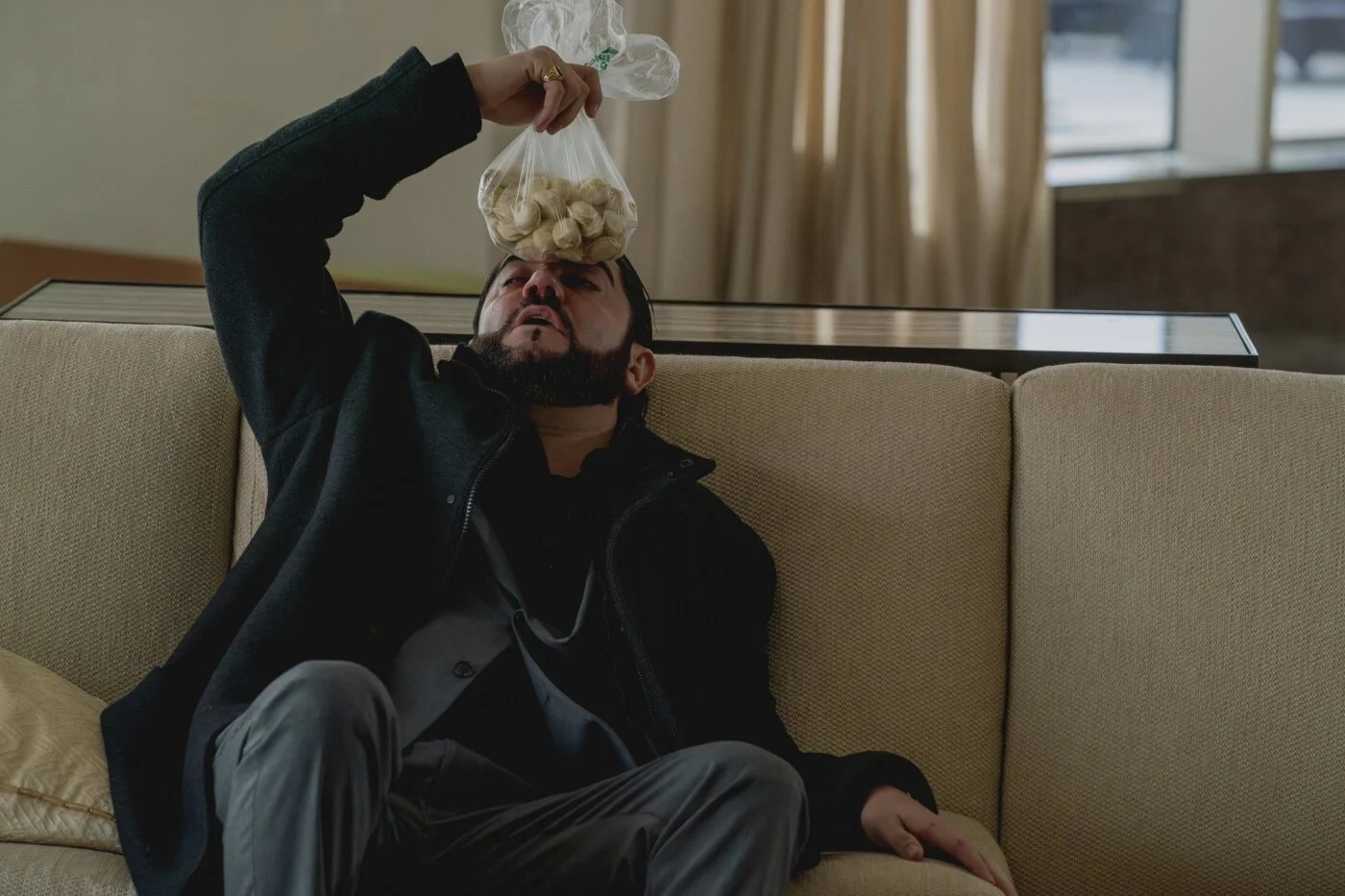
How I felt by the end.